Wednesday, November 14, 2018

One Reason I Wear Pads On Small Ramps

Why do I wear pads on ramps that are only 4’ high? Simple. Watch this clip.

 
There is a lot more going on here than it may first appear, and this bail could have been catastrophic without pads. It’s little shit like this, which is why I will always and unabashedly wear pads on even smaller mini ramps. Let's break down what happened here.

In this clip I was going into a frontside 5-0 grind to tailslide. I was leaning a tad too far forward at the start of the trick. The rear truck snagged as I was going into the tailslide, and some how I managed to pop the rear wheels on top of the platform, as can be seen in this screen grab.


With the wheels now on the platform, this caused the board to immediately stop its sideways momentum. Inertia, however, made sure that I kept going. At this point I tried to simply step off my board with my front foot, so I could easily “run out” and/or run down the transition (which is the normal procedure for 95% of all bails on a ramp this size). But not so fast. My front foot got “caught” in the pocket of the nose, and I couldn’t get the board out from under my feet. In the pic below you can see how the board is “stuck” to my front foot as I tried to “run out” of it. You can also see how I even managed to do a small ollie--note that my back wheels are now in the air, and no longer in contact with the ramp platform. 

 
Worse, forward inertia had continued to pitch my torso far forward of my tangled-up feet. By the time my front foot was finally off the board, my window of time to “run out” of the trick was over. I was way off balance, and there was no question I was going down. The next pic shows both the moment my foot is finally off the board, and also how far forward my leading shoulder is. There is no recovery at this point. This is also where things get interesting.

 
So, what to do in this situation? If you have pads on, you just drop to your knees, knee slide out, get up, and keep skating as if nothing happened. If you do NOT have pads, dropping to your knees would be disastrous. You may not be walking again for awhile. Without pads on for this bail, you would most likely do one of three things. First, tuck your leading shoulder and attempt to "roll out" on to your back (e.g. forward somersault). Second, take it on the hip. Last, is to Superman it, and dive face first straight to the bottom. There is no way you're not going down head first at this point, the only question is which of the three versions you're going to take. God knows how any of those other bail options would have ended, or what other kinds of injury would come from it. But, because I had pads on, I was able to just drop into a knee slide, and walk away unscathed. Pads are not always about saving your knees/elbows; they can often indirectly save other parts of your body, as this situation clearly illustrates. This bail would have been a very, very, different story without them. 

So, I will always wear pads on even smaller ramps because they occasionally save your ass, and save it in a major way. Old guys like me need as much help avoiding injury as we can possibly get. Avoiding injury today means we will be able to skate tomorrow (or go to work), and that is all that really matters. The real irony here, is that less than two years ago I hated wearing pads, and didn't even own any. Live and learn.

I've accepted the fact that I've pretty much become the exact stereotype of an "old guy skater," but I wouldn't have it any other way. Of course, the shorter way of saying all of this is, "I wear pads now because I'm old, and I suck." But, if you can't laugh at yourself, then what's the point? Life is weird. I'm still doing handrails at 45-years-old, but I won't go near a mini ramp without pads. Something is horribly wrong here. 


We Are What We Have Been Becoming

Do you remember the skater you were before the world told you who to be? We are what we have been becoming, and you once again become that skater when you get old. 


Some young kids in the 1980s. Some old guy in the present.


Wednesday, October 17, 2018

"I Broke My Neck, and That's Fine"

This is a scan of a 'zine article by Dan Overfield. Dan is "lifer" who recently broke his neck while skateboarding. He may never roll again.

For many reasons this article brought me close to tears when I first read it; Losing something you love. Loving something you lost. The hope, grace, and strength. The realization that none of us can do it forever. The perspective on larger aspects of life. It's a must read.


Tuesday, October 2, 2018

Shoulder Injury Follow-Up

This is a follow-up from the Sept 25 post about my shoulder injury.

I just got out of a physical therapy evaluation. I can see why people may not get PT for this injury (Stage II shoulder separation). They said that ligaments mostly heal on their own, and there is not much PT can do to specifically aid that process. Thus, my PT goals are to straighten posture a bit, strengthen supporting shoulder/back/trap muscles, and flexibility. Pain level should be the guide as to what I do / don’t do, and I should stop doing whatever I’m doing if pain kicks in.

Of course, my first question was when I could start skating again. He said exactly same thing the orthopedic doctor said, “Ideally, not until shoulder movement is pain-free during full range of motion. But if you started before then, shoulder pads could help avoid a set-back/reinjury if I were to fall on it again before it’s fully healed. And even doing that should wait awhile.”

My biggest short-term fear is falling forward on shoulder again (e.g. those bails when you get pitched forward and hit the ground). Skating right now isn’t a good idea. Skating without some kind of protection up there (esp. now) is unquestionably a really, really bad idea. There is no question that on the tail end of recovery, I’ll be skating for a bit in hockey shoulder pads, no matter how odd that may seem. I actually embrace it. Battle armor is punk. Plus, I think skateboarding is at it’s best when it’s challenging any type of status quo.  

But, the real question is the short-term issue. In six days I am headed to Austin, TX for a week. The purpose of the trip is, you guessed it, skateboarding. Timing is horrible. I’ve never skated a real ditch before, and this was going to be the first time.  So, what do I do?
I’m not sure yet. Essentially it’s going to be a (calculated??) risk assessment. Go, but don’t skate? Do some very mellow rolling around without any shoulder protection? Wear shoulder pads, and still take it easy, but maybe not quite as easy? I really don’t know. Where I am going to draw those lines is totally unknown right now…but I’m absolutely still going. 

I havn't skated in over two now, and it's really starting to get me bummed out. 


Thursday, September 27, 2018

Kingfoams: The Insoles That Will Change Your Life

APRIL 2022 UPDATE: While I will leave the below review posted, I can no longer endorse this product to the extent I once did. I am not quite sure what happened. Either Kingfoam dramatically reduced their quality control, or Vans really up-ed their game with the inserts in their Skate line of shoes (e.g. the "pop cush" insoles), but I now find Kingfoams to be quite...."hard" compared to Vans/Popcush. I'll write more on this here in the future, but for now I just wanted to get something quick up. I do not feel that the product Kingfoam is putting out today is the same as it once was, and that's a damn shame. I no longer use these insoles because they seem to now...kinda suck. 


[NOTE: Kingfoam has updated their web site. Hence, some the links below no longer go to the page they once did. I will try to update them in the near future. The info still remains on their web site, you just may have to dig a bit for it.] 

 
This post is a review, and ringing endorsement, of Kingfoam insoles.

 
Kingfoam insoles are among the best products I have ever encountered. I endorse them to/for anyone, not just skaters. There is literally no product in modern day production that I speak of as highly as I do of Kingfoams. If you are an older skater with any foot/knee problems, you should absolutely give them a serious look.

First, what makes Kingfoams so good? They are made of some crazy-ass foam that absorbs absurd amounts of force / impact, yet still provide for great board feel. I no longer fear Primo on kickflips. Let me restate that, I no longer fear Primo on kickflips. Yes, you read the correctly. They are that good. Bruised heels? Never again.

Despite what you may think of Aaron Kyro / Braille Skateboards, he does a damn good video review of Kingfoam insoles. Watch this clip and you’ll see an astonishing visual display of the impact absorption I mentioned. The video is also pretty amusing, too. Here is a link to Aaron's video.

Kingfoam makes several different types of insoles. People have different types of foot arches. Some shoes accept insoles, others do not. Hence, navigating all of it can be a little confusing. Hopefully this post will help.
                  
Let’s start with the basics. First, for Kingfoams to really function, you need a shoe that comes stock with a removable insole (e.g. Vans Pros, Adidas, etc.). A shoe like the NON-Pro Vans is going to have some problems because there is no removable insole. Adding one will probably make your shoe fit too snuggly/tightly. That’s bad.  

Second, you need to know what type of arch your foot has (low, medium, or high).
This video shows a very simple and easy way to figure that out. The video suggests cardboard. IMHO, newspaper works just as well, if not better. 

Third, take a look at the Kingfoam Buyer’s Guide, and note which of their insoles correspond to what type of arch you have.  

Last, and this is where things get a little cloudier: pick out which insole you want.  Here is what I can tell you about them from personal experience.  

I have a mid arch foot, and skate in Vans Pros. I hate the stock “ultra cush” insoles that comes with Vans. To me, they often feel like heel has sogged after a very short period of time. My knees and feet would often get sore after skating for a while in Vans. Many people have said this, and switched over to Nike as a result. I also work a job where I am on my feet all day. At the end of a shift, my feet are just spent/sore. Once I replaced the stock Ultra Cush insoles with Kingfoams, I never had these problems again

I have tried two different types of Kingfoams. The standard “5mm Kingfoam Insole” ($19.99), and Kingfoam "Elites" ($29.99). I wear the 5mm ones in my work shoes, and use the Elites in my skate shoes. The Elites offer a bit more impact protection. Hell, Jaws even wears them (and for good reason). Both the 5mm version, and the Elite version, fit great in Vans shoes. The 5mm ones comes in specific sizes, and the Elites are cut-to-fit.* Both of these do not work in Adidas. The stock Adidas insoles have a tad bit of arch support on the side. The two types of Kingfoams I use do not have any arch support, so when you put them in a pair of Adidas, they feel really weird. I imagine one of the Kingfoams with arch support would work in Adidas, but I can't speak with first-hand knowledge. I have no idea how they fit in other skate shoes, but I am sure you could find out without too much trouble. Google. Slap forums. Etc.

I have never tried the Gamechangers, because I am so enamored with the Elites. Someday I’ll get a pair and post a review. I have heard nothing but great things about them. Kingfoam also makes some very thin insoles. These might work in shoes that do NOT have a removable insole, but I would be skeptical of it. There is no way they could function as well as the Elites.

*Always cut these a bit too big at first, and then slowly trim to exact size. If you cut them too small, they will float around under your foot, and be extremely annoying, if not useless. To cut them, just remove the stock insole, and trace them against the Kingfoam, and then cut down with scissors. 

Tuesday, September 25, 2018

What Could Possibly Go Wrong? (Trials and Tribulations of a Turbo Dolt)


I am out on injury again. I haven’t had a serious one in a quite a while (2+ years??). I was overdue, and knew it was coming. It finally happened last weekend.

I was skating a 4’ high mini ramp with some friends, and was having a bit of an “off day.” I was even considering calling it quits early. For some reasons, I just wasn't feeling all that confident on my board, and was bailing things I normally have "on lock." I should have listened to my gut and left/stopped skating. Sometimes there is a 6th sense. However, the sessions' energy picked-up a bit, and I decided to stay a little longer. In the middle of a run I did a backside Indy Nosepick. On the reentry I was leaning too far forward. I thought I could ride it out, and almost did. Eventually, I got pitched forward just as I was approaching the other transition. I ended up squarely shoulder-checking the dead center of the tranny. Instant flash of pain. I thought I had broken my collarbone. 

I love this trick. Except when it goes horribly wrong.
  
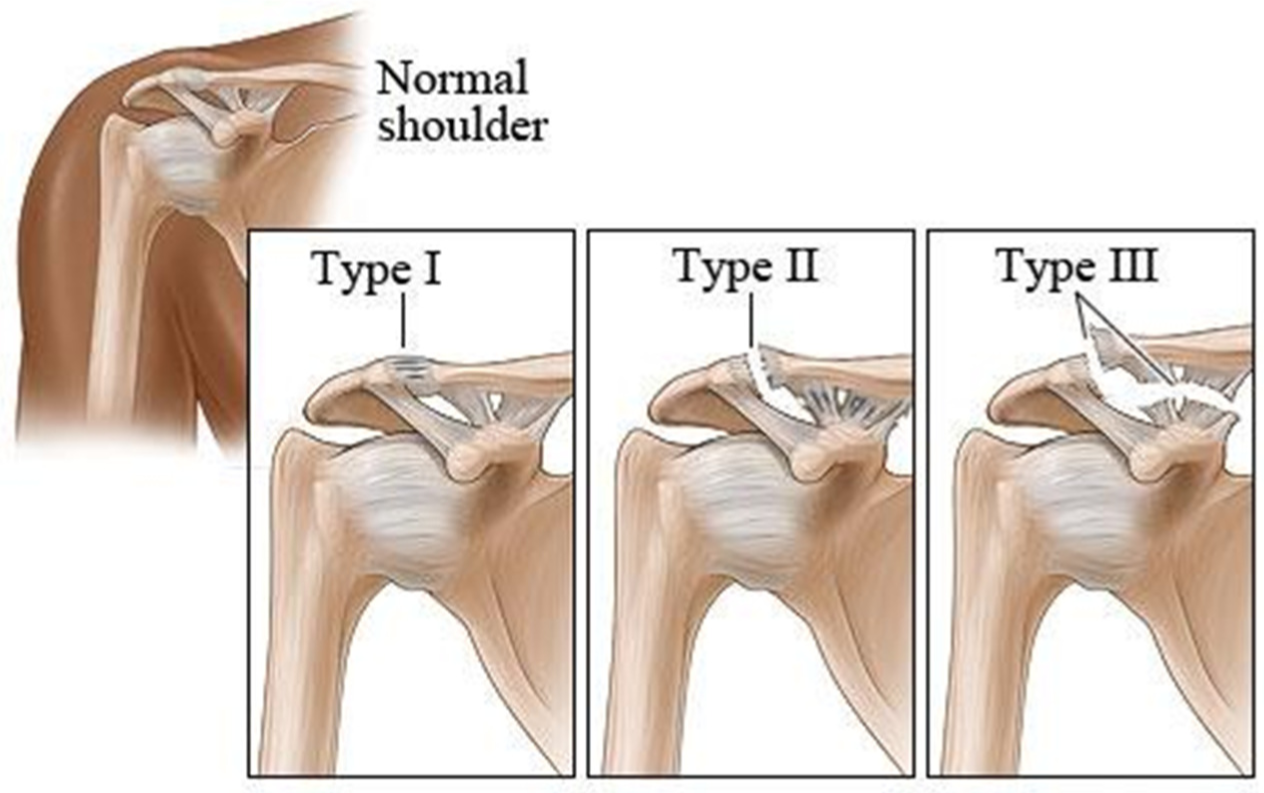
I went home, and it got worse. Later I went to the emergency room. X-Ray said no break, but that I might have a “shoulder separation,” whatever the hell that was. I had a follow-up with an orthopedic guy early in the week. He confirmed it was indeed a Stage 2 separation of theAC joint. He said it should heal on its own in about six weeks. I asked when I could start skating again. He said, “Ideally, not until all shoulder movement is painless.” But then he paused, and added, “You seem like a serious skateboarder. Somehow I think you’d be eager to get back at it. A Stage 2 separation can easily become a Stage 3, requiring surgery to fix, if there is significant additional trauma at the start of the healing process. IF you were to start skating before pain was completely gone, and I would advise against, I would wait several weeks, until things are feeling much better. Moreover, shoulder pads of some kind (hockey or football) could help limit further trauma to the area.” I could read between the lines, and knew that I would buy hockey shoulder pads in the near future.

I am really bummed out by the timing of this injury. First, no skating for six weeks? Ugh. That’s a long time. Second, it’s now early autumn in New England. This is the best time/weather of the year for skateboarding, and I will miss out on a good chunk of it. Third, my best friend Joe is leaving the area for an indefinite period at the end of the month. I wanted to get in some final sessions with him. Last, in early October I am going to Austin TX for a week. The purpose of this trip was to (a) skate drainage ditches, and (b) skate with a bunch of other people from around the country. I’ve never skated (or even seen) a real ditch before, so this was a “bucket list” trip. Now, it’s just frustration of purpose. My only hope is that my shoulder can heal-up as soon as possible. But, well, I kind of, maybe...well, I might have just prolonged that a bit by doing something obtusely dumb. I went skating tonight, and fell on it again, without any pads. Yeah. Let's play "Find the Turbo Dolt." Oh, right, it's me.

The city of Boston is renovating a large public park near my apartment. Baseball fields. Roller hockey rink. Soccer field. They are also putting in a new “pump track.” Two nights ago Joe and I went over to see how it was coming along. To our surprise, the surface had been finished. It was dusk, and we “broke in” to the construction site to get a closer look. Joe grabbed his board, and I told him to get mine, too. I took some real mellow runs. The track was unbelievably fun. More fun than almost anything I had skated before. It soon got dark and we left. We made plans to come back today, after the construction workers had left, but before it was too dark. If I was successfully able to roll around the pump track after dusk, I assumed I’d be fine carving around it during daylight. I was wrong.

The day before I had actually purchased a set of hockey shoulder pads. I had even mod'ed out a hockey jersey to wear over them. 


My plan was to probably wear them toward the tail end of recovery when I started skating again, and then sell them at Play-It-Again sports once I was healed-up. I was debating bringing them over to the pump track tonight. I put them on, and the weight alone was enough to make my shoulder hurt. That should have been enough of a red flag. It wasn’t. I decided to not bring them. I also thought I should wear shorts and bring my knee pads. Sometimes when you stumble out of something, you could either drop to yours knees (if you had pads on), or just roll on to your side (and shoulder). The latter is the most common way people bail, but I was worried about that “roll on to your side/shoulder” option. Dropping to knees would be a much better option right now, even if not usually the most practical way to bail in a “street/bank” setting. But, I decided to also forego knee pads, and off to the pump track I went.

So, let’s review. I have a Stage II separated shoulder that is only 8-days old. I am not supposed to be skateboarding. I was advised to wear shoulder pads. Knee pads would potentially be a lifesaver. Oh, did I mention I was wearing brand new shoes, too? What could possibly go wrong?

We had skated the track for about 45 min the other night, with no problem. I felt like I had pretty good familiarity with the bumps/transitions/quick turns/etc., and knew what to expect. On the first run I get through the bigger parts of the track, and enter the mellowest set of bumps near the end. Something happens. I’m still not sure what, but I realize that I am going to go down. I step off my board, and start stumbling, realizing that I could have dropped to my knees, if I had knee pads on, but I don’t. To avoid shattered kneecaps, I do what 30+ years of skateboarding muscle memory has taught me to do; roll on to your side, and take the impact with your arm and shoulder. And that’s exactly what happened.

The pain was instantaneous. Hell, tying my shoe and wiping my ass hurts my shoulder right now. But this? It was bad. Real bad. I was convinced I had just turned it into a Stage III, and would soon be back at the hospital for surgery. I was infuriated at myself for every bad decision I had just made, starting with even getting on my board in the first place, not to mention leaving the pads at home. Was it now going to be TWELVE weeks before I could skate again? I seethed and boiled. I wanted to sit down and cry with frustration, anger, and stupidity. How could I be so dumb?  I went home, took Advil, put ice on my shoulder, and headed-out to work about an hour later. I was in the foulest mood I can ever remember having during my adult life. Everything was foreseeable, and was 100% of my own doing. How could I be so dumb?  

It’s now 3:26am. I am home from work. The constant pain has mostly subsided in my arm. That is a good sign. It hurts more than before, but now it also feels different. Before it hurt, but that was mostly it. Now it hurts, but also feel like something is out of place and/or not aligned correctly. Super dreamy. I am going back to the doctor’s ASAP to see if there is additional damage.

Morals of the Story:
(1) Don’t be an idiot and skate when you are injured. 
(2) Pads are your great friend, when you don't ignore them.
(3) Expect the blog to be a lot more active over the next few weeks during recovery.


Wednesday, August 8, 2018

The Lunatic Fringe: An Open Letter to Anyone Who Sucks at Skateboarding

 
The “Open Letter” was written a few years ago. Today, some parts of it may seem a bit dated. A few comments about that follow at the very end (e.g. it may help to read "The 2021 Post-Script" first, but that is certainly not required).

  The Lunatic Fringe: An Open Letter to Anyone Who Sucks at Skateboarding

[Every so often social media bubbles-up with complaints that some skaters post “boring” or “sub-standard” skate footage of themselves (e.g. “Do we really need to see, or cheer for, someone doing a kick turn or footplant?”). Not long ago another of these incidents occurred. It was time to throw down a gauntlet.]

"Maybe the basics are all you’ve got left, or all you ever had. Are simple styles less intense skating’s modern mainstream? Without question. Slappies. Bonelesses. Carving a bowl. It’s easy to argue such things are not “serious” skateboarding. Fair enough. For the sake of argument, let’s just assume they aren’t. Where does that bring us? Well, if a lack of seriousness in skateboarding is problematic for you, I suggest you get the fuck out of our subculture." -Paraphrasing Kyle DuVall

Skateboarding was once a crime. In 2020 it will be an Olympic sport. A lot has changed. Skate parks are often now sandwiched between soccer and little league fields, adjacent to a dog park, and next to some other iconic metaphor of affluent, white, suburban America. Yes, we have “made it.” Skateboarding is no longer a (social) crime. Big corporate money. Video games. VICE TV shows. ESPN. Red Bull. Monster Energy Drink. Target. Nike. The Olympics. This is not necessarily a bad thing. However, with this new normal(ization), aspects of more traditional social structures and attitudes (“sporting” and otherwise) have also emerged within skateboarding (even if they are often unspoken). Fit in. Do what your peers are doing. Don’t stand out (too much). Score more points than your opponent. Go bigger. Go longer/further. Be more tech. Use your skateboard as an extension of your ego. You aren’t “relevant” if you’re not dropping the newest “banger,” or trying your best to mimic (or fawn over) the type of skateboarding shown by modern hype media. Sure, facets of this have always existed in skating, but it now seems amplified. I am not, in anyway, trying to make the “old days” sound utopian. They certainly were not. That said, there is no denying that there are now more “normies” within skateboarding than ever before. Moreover, they are bringing their version of “normal” with them. Today there are some people in skateboarding whom likely would have been the very ones yelling “SKATE FAG!!!” at us in the not-so-distant past. All of this I find very disheartening. It is completely alien to what first drew me to the “outsider” world of skateboarding.

Personally, skateboarding has always been a means to “opt-out.” It was (and still is) my revolt against pop culture, and the standard mores of organized sport and organized society. Granted, I come from an era when skateboarding was nothing more than a cheap form of social suicide. Being a skater once automatically made you an outcast, and a target of contempt and ridicule. Now that skateboarding has become normalized, it has also become its own facet of pop culture—Thrasher apparel is now available at mall kiosks, everyone has a DC Shoes t-shirt, and there is that whole Supreme/Huf/Diamond thing, too. It almost seems as if the “goal” of skateboarding has become to post the most NBDs on Instagram. Well, fuck that. “Opting out” suddenly also means opting-out, or rebelling against, certain aspects of skateboarding itself. Irony always wins in the end.

As skateboarding becomes more and more of a social norm, and skateboarding’s own social norms become less and less distinguishable from gym class, a trip to the mall, or a large scale sporting event, I find it more important than ever to be a visible, and vocal advocate and representative of a lunatic fringe. A fringe that embraces an outcast status from both popular culture, and popular skateboard culture. A fringe that, as Lance Mountain once said, “I represented that skateboarding is fun to do by being terrible at it.” Why embrace this? Because skateboarding is more than simply outshining others at the park, out-scoring an opponent, buying placed products, or fitting in with the cool kids at the DIY. As I understand and experience it, skating is a direct insurrection against those tired social tropes. That is worth defending. That is worth fighting for.

Skateboarding is at its absolute worst when it closes doors because of ability-based social hierarchy. This is especially true, and atrocious, when it occurs at the local level. Skateboarding is at its best when it opens doors that show substantive and meaningful alternatives to a typical consumer/competitive/jock existence. With more of the "normal" seeping in, there also needs to be more overt counter-points. It is more important to be a dissident within skateboarding today than it ever was before (well, the early/mid 1990s certainly could have used some, too).

This is not to say there is, or should be, an “us v. them” dichotomy—we have far, far too much of that in the world right now. What I am saying is there is no “right,” “correct,” or “valid” way to engage with skateboarding, only different ways. Once some things are seen as “good” or “acceptable” (back tail down El Toro) others are seen as “insignificant” or “trivial” (kickturn on a micro ramp). Yet, they both stem from the same Stoke. But all of this is common sense, no? I would think so. I would hope so. Then why does it even need to be stated? Because sometimes there is great force in speaking the unspoken. I simply want to add a voice to an existing chorus. Moreover, if you go back to the first paragraph of this post, there are some that may benefit from hearing differing perspectives.

Skateboarding needs visible counter narratives—ones that show “skateboarding is fun to do by being terrible at it.” Narratives that show skating is not only about ledge NBDs, triple kink rails, 15’ high gaps, and mega ramps. Of course those are all valid pursuits, but they are not the only valid pursuits. The counter-factuals are equally valid (I would argue even more so, but I’ll save that for another post). We tread shark infested waters if NBD/banger-based skating is represented as the only legitimate face of skateboarding. It is essential for those other faces to also flourish. What are those “other faces”? I leave that intentionally open and vague, but I will say this much; it certainly includes kick-turns.

Some stoked, unknown, skater.


For all the kooks out there—to all the skaters not trying to be the next Jaws, Nyjah, or Shane O’Neil, to all the people who are just beginning (adult or kids), to all the life-long skaters who have aged-out of "social relevancy," to all the skaters who pad-up just to skate a curb, to all the people who are rolling just because they love it, and are not trying to prove anything, or impress anyone, to all the people who are following their own path, and their own Stoke, I salute you. I will always applaud your efforts no matter how small others may think they are. You are valid. You are the counter-point. You are skateboarding in its best form.

So, get stoked on what ever it is that brings you a smile, in what ever form that may be. Kick turns. Skating at the same spots. Doing the same simple tricks. Maybe not even doing tricks at all--just carve and roll. Impress no one. Have fun. Your stoke does not have to meet anyone else's criteria. To that end, whatever you are doing, I will always cheer for you. Not just because at 8, or 48-years-old, that you just did your first carve, but even more significantly, because you represent the most important thing I know in skateboarding; a place outside a “sporting" norm, without any rules, judges, or point-scale gradation. A place where we follow our own Stoke, on our own terms, with our own meaning and purpose, free of anyone else telling us how anything is supposed to be done.

So, yes, absolutely share that footage with the world, because it will unequivocally inspire others. Moreover, it is the counter-narrative. Every “non-banger” clip and photo is a chink in Olympic armor, and shows that skateboarding isn’t as vapid as Street League, Thrasher, and many others make it out to be. Even better, your clips and photos show that skateboarding still has a place for people who want to opt-out. This version of skateboarding, the one that remains an “outsider,” is the skateboarding that is important to me. It is the skateboarding that I fell in love with. It is the skateboarding that I will always champion and defend, above all else.

Post-Script: To be clear, I am not in anyway knocking youthful tech dogs, stunt men, or their fans. I was once one myself in younger days. Further, there are plenty of skaters with pro-level ability who embody everything written above. I am also not knocking anyone that wants to pursue the dream of Olympic gold, or to be the best competitive skater in the world. If that is your path, I wish you the best of luck in those pursuits. What I am simply saying is that there is far more depth and soul to skateboarding than standing on a podium (real or imagined).

THE 2021 POST-SCRIPT: As I mention at the top, the "Open Letter" can feel a bit "dated" in places. To that end, there are few things to keep in mind when reading it. First, is what it was written in direct response to. Second, is who the target audience was. Those two cannot be separated from each other. The “Open Letter” was written in direct response to criticism about “sub par” skateboarders posting “boring” clips on social media. The target audience was (a) the critics, and (b) those criticized. My goal was to tell the critics to “Sit yo’ ass down,” and to tell the criticized to “Stand the fuck up.” I still fully endorse those positions. 
 
However, what now feels the most “dated” about the “Open Letter” is just how diverse skateboarding has become. Don’t get me wrong, there is still a long way to go, but the landscape has changed. A quick scan of social media shows that whatever variant of skate culture your looking for, it’s out there. Mega ramps. Mega-old guys. Ledge gangsters. Old dudes padding up just to skate curbs. Female pros. Females starting for the first time their 50s. Olympic aspirants. Satanic barrier cultists (I’m a huge fan of BA.KU.). Gender queer rippers. Hell, slalom is even making a good come back. And they now all have a place in skateboarding. That’s awesome. It seems like all disciplines, and all different groups of skaters, are all grooving with each other and sharing the Stoke. And that’s how it should be. Sure, there are some turboclowns out there. Old dudes who hate “all that flippy shit,” kids who laugh at anyone with pads and a reissue set-up, etc. But they seem to be few and far between these days. As I said in the “Open Letter,”...."the most important thing in skateboarding is when it’s a place outside the “sporting" norm, without any rules, judges, or point-scale gradation. A place where we follow our own Stoke, on our own terms, with our own meaning and purpose, free of anyone else telling us how anything is supposed to be done...This version of skateboarding is the one that is important to me. It is the skateboarding that I fell in love with. It is the skateboarding that I will always champion and defend, above all else.” While some parts of the “Open Letter” may seem dated, these sentiments remain timeless. Find your Stoke (in whatever form it comes), and follow it with reckless abandon.